The tickle of curiosity. The gasp of discovery. Fingers running across the keyboard.

The tickle of curiosity. The gasp of discovery. Fingers running across the keyboard.

The World of Iniquus - Action Adventure Romance

Showing posts with label crime fiction. Show all posts

Tuesday, May 12, 2026

Train Your Writer Mind Like an Algorithm


Fiona kindly allows me to share my musings (aimless ramblings?) here. She’s a great scribble sibling and a true friend. And this outlet is one reason I still write at all.


See, on my blog, I record my wife Gaye’s breast cancer journey. In my day-life, I’m a jumped up accountant who doggy paddles against a 20-foot swell of imposter syndrome. Hour-to-hour, I often feel like I’m drowning or failing or simply failing to drown.


Yeah, I’m a “hoot” at parties.


Thing is, I didn’t realize until a couple of years ago that what I struggle with (mostly) is anxiety. There’s also a pronounced lack of coping skills. Oh, and a splash of immaturity.


NOTE: First/foremost none of this is intended as medical advice. After too many years of struggle I went to my doctor and got some help. I simply cannot recommend talking with your family physician highly enough.


I struggled before this diagnosis. Among other things, my anxiety often manifested in a short temper exacerbated by the previously mentioned dearth of coping skills and immaturity. Through counseling, I was introduced to Dr. David Burns’ The Feeling Good Handbook.


A comprehensive guide to adulting


Initially, I thought TFGH was kinda hokey. Who talks like that? How do I relate to this? But I take homework seriously and continued my reading. Then the messages began to seep through the granite-like substance that is my skull. 


The cornerstone of Cognitive Behavior Therapy, TFGH helps the reader through rational examination and thoughtful response exercise to build healthy strategies. Most importantly, Dr. Burns successfully proves-up the theory that your thoughts dictate your emotions and all-too often, behaviors. 


Yeah, yeah, the idea’s been around for well over 1800 years. I’m a little slow on the uptake. 


However, once I got it, (most of what we feel is due to what’s going on in the noggin’ NOT what’s going on outside the noggin’) my perspective shifted. Did life turn to gold, success, and ponies overnight? I’ll let you sus that one out. The point is, things did get better.

The most important “better” was my relationship with my wife. For the first time in years, I saw her as an ally and not an adversary. There isn’t an ounce of hyperbole when I say the book saved my marriage.


But then I saw life as beautiful experience instead of a dogged, never-ending challenge or torment. Work improved. I went back to school. Work REALLY improved.


As always, this broaches the eternal question, “The hell this has to do with writing?”


Honestly, more than you’d think. What didn't initially improve was my writing. I haven’t done a lot of fiction writing since Gaye’ diagnosis. Playing “cops and robbers and more robbers,” seems silly when your beloved faces cancer. 


Then there’s the day-to-day recovery—at the expense of actually living. 


It’s really easy to get invested in laundry, cleaning, and Walmart runs. “Oh, up early? That book can wait ‘cause there’s never gonna be a better time to get at that litterbox…” Then there’s that whole work-for-pay scam. 


They laugh at my gainful employment


“Objects at rest remain at rest…” Newton’s 1st Law


A writer must write. Failure to write carries some scary consequences. The least of which is the atrophy of imagination. That immediately leads to facing life, full-on with no buffer. I personally cannot do that. 


Zeno of Cyprus, also a "hoot" at parties.


Just as we must manage our thoughts and emotions, (or they will certainly manage us) we must manage our creativity. Especially when you haven't written in a while or you're empty-headed or even though you want/need to, just don’t wanna.


So, how-to?


Pinterest—bear with me—is a good guide. You look at/like/pin photos of cars and Pinterest shows you more cars. Same-same for cats, food, or comic book covers. 


The (evil) algorithm, be that anxiety, depression, etc., also notes what you seek and gives you more of it. Negative programming? No thoughts of kitties and Viennese chocolate cake for you. You get intrusive thoughts about your report deadlines, every stupid thing you ever said, and the last 16 arguments with your SO.  


Again, how do you change what it shows you?


For me it was nearly impossible to leap right back into cold-start creation. Instead, I started reading other peoples' work. Bardugo's Grishaverse, a Marvel Comics omnibus, J.L. Campbell's "Murder She Wrote." And there were sparks in the imagination box.


But not enough to charge into the oppressive blank page/screen. Instead, I opened the final (for now) draft of my manuscript (MS). The MS that was perfect something-something years ago. The MS that is ready for line-editing. THE MS that requires no further tinkering with tone or pace.


Funny thing, once I opened that file, I found some tonal and pacing anomalies. 


After a couple of weeks of yet-further revisions, I began to think of a short story that I plan to expand to novella. That was not as deliberate as it may read. It was cognitive redirection. 


Listening to (White Man) in Hammersmith Palais, by The Clash—and I immediately know where my protag should be from, geographically as well as culturally. An article on the vocational/trade training renaissance and voilĂ , my protag has some skills that mos def will impact the plot/goals/stakes. A gag in a sitcom? Well, you get the idea.


Positive-in, positive-out. Focus on what nurtures your spirit and fuels your dreams and you’ll see the stuff of dreams more often than a blank page, (screen, you know, whatevs).


NOTE: all the "Power of Positive Thinking," in the world will not treat your depression, anxiety, or PTSD.


Remember the “this is not medical advice” disclaimer above? Yeah, this is a guide for writers trying to resume their scribble game or find a new grove. This is not medical/mental health  advice of any kind.


Again, I needed help and I sought it out. If you’re struggling, reach out to your primary doctor. If you’re not there yet, maybe explore your employer’s EAP program. Failing all of that, NAMI helps connect people to resources. You can find out more here.


Key takeaways:

  • Focus on the negative, all you’ll see is negative

  • Focus on the positive and you'll see positive

  • Take small steps and build on the results

  • Nothing happens without work

  • No “tip” is a replacement for professional help


Get well, stay well, keep creating.


I own none of the photos above. All are used for illustrative/educational purposes as covered by the Fair Use Doctrine.

Tuesday, April 14, 2026

Crime Report: Murder by the Book, a Review


Three women, Addison Comstock, Alecia Cookson, and Casey Mitchell. Different ages, different goals, and different social statuses but they’re drawn together by tragedy, stolen dreams, and tortured pasts.  Two of them are on a hunt and the third has no idea.


Trigger Warning: the following review subject deals with child-abuse and sexual assault.


However, Murder by the Book author, J.L. Campbell respectfully and maturely. There are no graphic or salacious details here. By no means a “cozy,” MbtB is not gritty pulp, either.


When we meet international best-selling author Addison Comstock, she is hip-deep in problems. She has a deadline galloping up on her. The editor supervising her team of ghostwriters has just died. Worse, the police have detained one of her ghost writers. Worst of all, her public continues to question the provenance of her pageturners. 


But Addison Comstock didn’t claw her way out of poverty and abuse to turn-tail and run. The abuse she suffered as a child has left her with an iron will. Her success and the price she has paid for it has honed her ambition to a razor’s edge. Still the questions unnerve her.


Alecia Cookson has had it. Her “situationship” with Quentin Young—always on the edge of collapse—is more aggravation than ecstasy. Mostly because she strongly suspects he is messing around. Her work for Addison is one-part pay the bills and two-parts emotional torture. All the while she searches for the truth about her family. More than fame, more than fortune, Alecia wants to know the truth.  


With her own history of childhood abuse Alecia needs to know the truth about her mother and what happened to her. Lie, cheat, steal, Alecia will not stop until she gets the answers she wants. No matter who she has to step over—or step on—to get them.  


More than Addison, more than Alecia, Casey Mitchell is determined to succeed. After years of childhood horror, she is on a mission for justice for her mother and her sister. Buoyed by her determination and the experience of serving justice once already, Casey is unencumbered by Addison’s fear or Alecia’s emotions. 


Casey will see justice done. She will get what is owed to her family. Even if it costs her everything.


“Mark my words, yuh wickedness will catch up to yuh one day. The God I know will see justice served. You will never be happy.”


Like Campbell’s previous crime novel, Flames of Wrath, (reviewed in 2023) there are no “heroes” here. These are three women who have crawled out of generational poverty and abuse. All three have used questionable means to achieve their ends. And all three are locked in their determination. 


None of the three intertwined paths lead to a “happily-ever-after.” But as with FoW, MbtB is a delight in execution. When the twist (which won’t be spoiled here) lands, it’s not so much a shocker as a worth-the-price-of-admission show. 


That’s J.L. Campbell’s strength. She has a true command of reality and how her story fits within a brutally real world. Her violence is visceral, her pain is wincing, and her victory is a hard-won triumph for her character and the reader.


Murder by the Book is a lot of fun. It is also available for pre-order, here. Check it out!

Tuesday, May 14, 2024

Writing the Girlfriend of Color


More reality than the leading costume drama


Around 2009-ish, I was in a critique group with the late-great Roger Paulding. Roger was an excellent writing coach—well-read, true ear for multiple genres, no nonsense crits—and a damned-good writer.

Usually...


On this particular night, he decided to grace us with a chapter from a thriller in progress. I’ll spare you the play-by-play and cut straight to business. 


The protagonist was an FBI agent recovering from surgery. So far, so good. Another FBI agent provided care, disguised as a nurse, either to provide close protection or surveillance of the protag. A little fuzzy but still functional. 


The protag was a white male, stoic, focused, professional—the character you’ve seen in 80% of movies/books written. The agent/nurse was an African American woman and written to be a romantic interest for the protag.


I’ve been in a mixed-marriage for something-something years and seldom see depictions of couples like us, so this got my attention.


Then it got awful


Roger wrote Agent Nurse as teenage-smitten for the protagonist. Like 2500 words of internal dialogue about how attractive he is, how would her mother react if she only knew that Agent Nurse was attracted to a white man, (if not apparent, I'm editing heavily) and basically everything but "is that an erection or am I just excited by antiseptic and hospital corners?" He also liberally sprinkled-in slang and dialect for long-lasting offense.


When he finished reading, we all sat stunned. Normally the first to charge in amid a flurry blue-ink markups, I kept my yap shut. When the critiques finally started, the comments were “I liked your use of punctuation,” reticent. But Roger knew my relationship dynamic and wanted my feedback. 


Then it got hostile


I began with the indisputable truth: he could write better than this. Agent Nurse was 2-dimensional and like a white guy's idea of how a black woman would speak. Once I started, I was unable to get my mouth back on the leash. I further said the logic did not track on any story level: dramatic, comedic, or pornographic. The depiction was, in fact, offensive in the way it wastes the readers’ time.


Afterwards, (as in after I was invited to leave) I realized that really, this is the way a lot of interracial relationships are written. If written at all, they are shoehorned in as gimmick or simply to shock. And then I filed the whole experience away, under “I,” for “I think it’s time to give this crit group a break.”


Last year, I found Onjuli Datta’s excellent essay, Writing the White Boyfriend. Datta succinctly summarizes the dawning of interracial romances as a subgenre. She then illustrates “the white boyfriend” as the author’s favorite novel trope for exploring the delight in differences. 


Datta reminded me of the crit group and all the things I was too angry to articulate about Roger’s fu—mbled up chapter.


But I digress. Onjuli Datta’s essay is as thoughtful as it is brief. If I search to find a criticism, it’s just a little too polite but it’s not her fault. 


This touchy business


In 1968, groundbreaking series, Star Trek, made history with the episode, Plato’s Stepchildren, which featured American television’s first interracial kiss between Captain Kirk and Lt. Uhura. To this day, William Shatner, (Captain Kirk) qualifies that his lips never touched Nichelle Nicols' lips. That’s how deep racism and racial injustice goes—a white, jewish actor from Canada STILL feels the need to specify that his lips never touched a black woman’s.

I’d like to say we advanced beyond these petty prejudices but the whole point of this piece is honesty and knowing better to write better.


Jean Rhys’
Wide Sargasso Sea, (published in 1967) is a prequel to Charlotte BrontĂ«’s Jane Eyre, (published in 1847). WSS tells the story of Rochester’s first wife, Antoinette. Rochester’s creole wife. Who ends up sold into marriage, stolen from her island home, and locked in Rochester’s attic while he woos, the white-on-white-in-white governess, Jane. 

Somebody gotta die…

So, yeah, Antoinette, (Bertha in JE) ends up dead in a house fire that she, (allegedly) starts. Rochester claims she was mad. Personally, I think she was good and fed-up with Rochester and his moldy-ass house.   


Roger wasn't grown enough to write this relationship

Either way, people weren’t ready then, (they’re barely ready now) for a white-man-woman-of-color romantic story. Films make the best record. In Boris Sagal’s film, The Omega Man, (1971) it’s Charlton Heston’s Neville. In the James Bond film Live and Let Die, (1973) it’s Gloria Hendry’s Carver. In Joss Whedon’s Serenity (2005) it’s Alan Tudyk’s Wash. But the result is the same—if it’s an interracial relationship one of them is gonna die.


They both live but...yikes he was creepy even then.

The thing is, most of the examples I cite, (Serenity being the exception) do not represent healthy relationships or fully formed characters. Most were written by WHITE dudes and they don’t want real women. They want platforms for their message, or vessels for their fetish, or in the case of Bond, a trend of the moment with a reassuring splash of colonialism and misogyny. 

Good fiction requires some honesty. That honesty requires a clear-eyed approach to characterizations—the good, the bad, and the embarrassing. 


But there’s no ignoring what’s gone before

Centuries of prejudice and racial injustice is the single largest obstacle to writing a responsible depiction of interracial relationships. However it is not the writer’s job, (capability?) to redress history. The writer’s job is to tell a story, honestly and responsibly. Ideally, it should be entertaining, as well. None that is possible without an engaging, fully formed woman.

So, who does it right?


Write her well—the rest falls in place

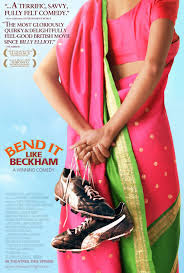
In 2015’s Bend it Like Beckham, Jess (Parmender Nagra) LOVES football, which is denied to her by her strict Sikh family. She develops feelings for (white) football coach, Joe, (Jonathan Rhys Meyers) as you do. Jess has goals, fears, and hopes—all independent of Joe. 


Sure, call her the "girlfriend," I dare you.

In James S.A. Corey’s Leviathan Wakes, (and the television The Expanse) Naomi Nagata, has goals, (self-rule and full rights for her people) hopes, (an end of hostilities perpetuated by Earth and Mars) and fears, (that her past activities with a separatist group will be outed)—all before she ever meets James Holdin.  

If not readily apparent, both women also have flaws. Rather than be honest with her parents, Jess sneaks around and lies, straining all of her relationships, (aka acts like a teen). As a former agent of a violent separatist group, Naomi has done much worse. Her subterfuge puts herself and her crew-mates in mortal danger. 

Both women also have strengths. Jess is loyal to her friends, (covering for one who is gay) and family. She subverts what she wants for the sake of her sister's impending nuptials. And she matures enough to come clean with her family.

Naomi is also loyal to her friends—and not just to the tall, lanky, good-looking friends. She is sisterly to Amos, the psychopath, and to her former OPA mentor. She is brave and doesn't back down. Mostly, though, she is smart. A mechanic turned engineer, she keeps their ship in the air.

Write people, not characters—and certainly not stereotypes

Worry less about looks and more about content of character. Identify the person you want to write to yourself first. Instead of relying on sit-coms or even rom-coms for reference, write a bio. Of course, 90% of what you write about this woman will never be seen by the reader but it will help you zero-in on the person, their wants, needs, and fears. If you're successful, you will want to spend ten-or-so hours (the time it takes to read the average novel) with them and then write their part of the relationship, honest and relatable.

Side note: never, ever use food as a skin-tone descriptive. It's objectifying. Yeah, yeah, you have a friend who doesn't mind. Guess what, a lot more people do mind and they don't know you.

Relevant, non-offensive skin-tone descriptions. 

Differences are to be celebrated


If you believe it they will live it

The person who says “I don’t see color,” or “color doesn’t matter to me” has the privilege of not being on the receiving end of prejudice with power. They’re also lazy and refuse to deal with their shit in the context of a larger world. Don’t be that writer. Embrace your person’s individuality, neither as gimmick nor gag but as an individual.

Nobody gets a “pass”

No racist-banter. No slang. And I don’t care how many Eddie Murphy movies, Chris Rock stand-up routines , or Quentin Tarantino artistic-license explanations you’ve seen—use racist invectives, in ANY context, at your own peril. 

Who wouldn't want to live in their world— or write it?

Write actual people talking, arguing, getting to know each other, getting rude with each other, and falling in love with each other. 

In her article, Onjuli Datta refers to the honesty of writers, (almost all women) when crafting the white boyfriend, their flaws and characteristics. She also writes of the reversal, (that isn’t quite reversed) of the exoticism/fetishism from earlier books with white male leads falling for a beauty of another color/culture. Write vibrant. Write clear. Don’t backtrack.

Check out Onjuli Datta's article, here.


I own none of the images here. All are used for educational/instructional purposes, as covered by the Fair Use Doctrine.